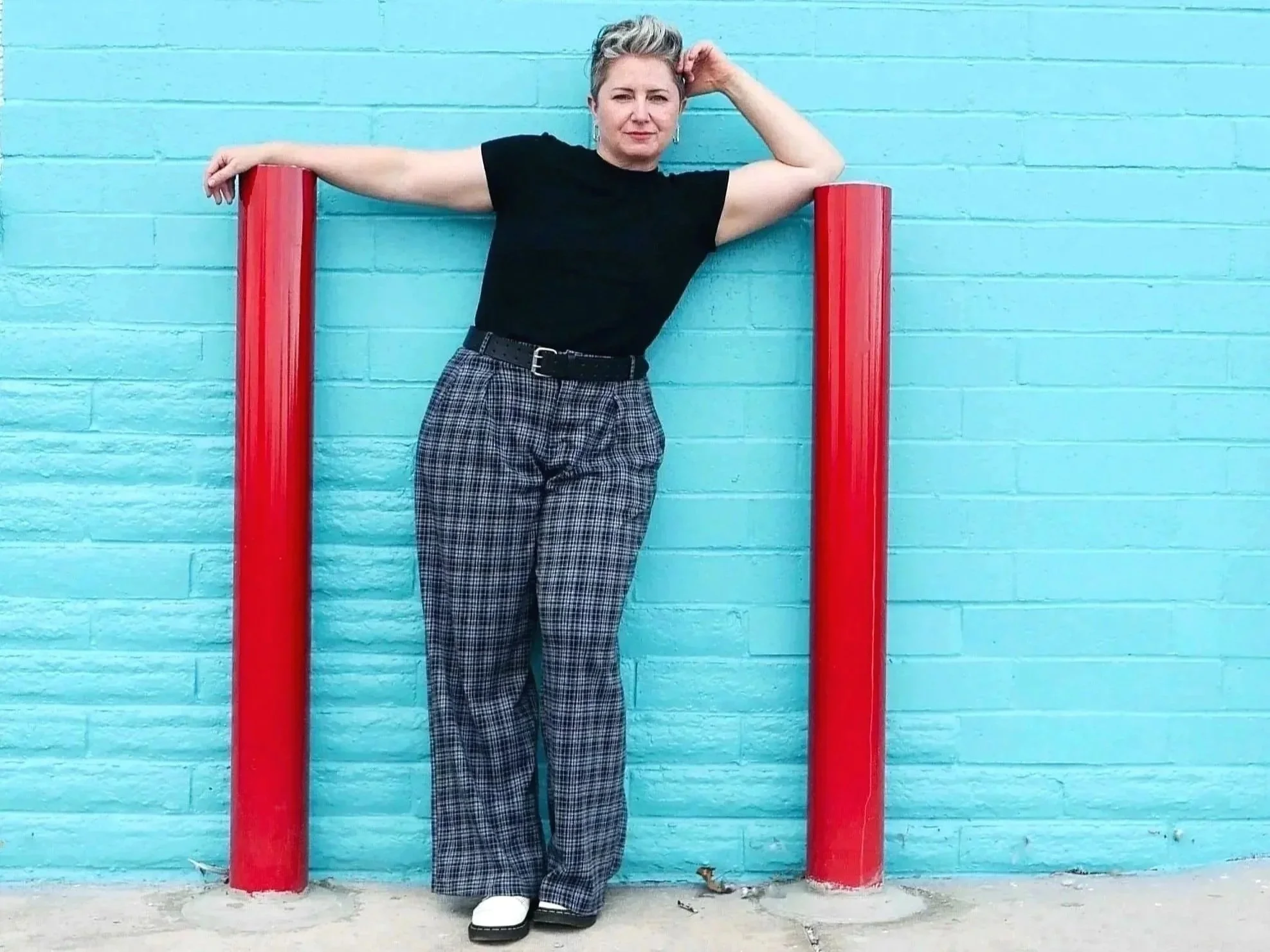
Hello, I’m Kelly Ferguson (she/her), the photographer behind Ferguson Avenue Studio.
My background in dance shapes everything I do here. Years of movement training taught me how to read body language, understand posture, notice where tension lives, and gently guide people into expressions that feel natural, powerful, and grounded.
At my core, I see myself as a dance photographer. Not only of formal dance, but of the everyday choreography of living in a body. I see dance in gestures, the way someone holds themselves, shifts their weight, softens, or takes up space. The human form is always communicating, and I’ve built my work around paying attention to that.
I studied dance and exercise science at the University of New Mexico, and later earned a master’s degree in counseling from the Leadership Institute of Seattle. That combination continues to shape how I work, bringing together an understanding of the body, human behavior, and the importance of feeling seen and supported.
I grew up in a home where photographs lived on the walls. My parents were intentional about documenting our lives, and while I didn’t realize it at the time, that environment left a lasting impression on me. It’s part of why I believe so deeply in images that are not just taken, but printed and lived with.
My family consists of my wife and our two dog. The relationship to memory, storytelling, and personal archives is something I explore more deeply on my YouTube channel, The Creative ArchiveXO.
Headshot and portrait work are where I feel most at home. They allow me to study the human form, notice the subtle ways we communicate, and create images that feel personal, honest, and true.
At the heart of it all, my role as a photographer is to witness and to notice.
It’s an honor every time I’m invited into that process with people.
A twist in my spine, and my story.
This is me at twelve years old, recovering from scoliosis surgery in 1992. I had a Harrington rod fused to my thoracic spine, a procedure that ultimately ended my ability to keep training and competing in gymnastics. I’m smiling in this photo, but losing gymnastics and certain physical abilities as I knew it, was devastating.
No one could have explained then how deeply I would grieve the loss of this version of myself, how long it would take to feel strong again, or find something I could love with the same resonance and depth. Before and after my surgery, the highlight of my month was the arrival of International Gymnast magazine, a portal back into a world I deeply missed. These pages were my lifeline.
What you don’t see in this photo are the posters and photographs of gymnasts that covered my closet doors and bedroom walls. Without realizing it, I was developing my photographic eye for what would influence my work decades later.
Losing gymnastics was a deep grief, a loss of identity and the closing of a beloved chapter. That grief still shapes what I notice and choose to honor in the photos I make today. Whether I’m photographing gymnastics, portraits, or my own family moments; I’m drawn to the small, tender glimpses of vulnerability and strength—alongside the sense of a bigger journey unfolding. For me, being a photographer is more than making pictures for a profile page; they’re a way of marking a chapter in someone’s life and the meaning it holds.